On every sailing boat, somebody is keeping an eye on the wind. The real question for your week is whether that somebody is you. If you plan the route, trim the sails and make the weather calls yourself, the trip is entirely yours. If you hand all of it to a professional, those same hours go to swimming, reading and arguing about lunch. Neither makes the better holiday. It comes down to your experience, your qualifications, who’s coming and what you can spend. Catamarano Skipper is a guide to skippered multihull options, so we’ll treat the choice of a boat with skipper fairly against sailing independently, whichever sailing holiday you have in mind.
Picture the day from a deck chair. Coffee, a swim stop, a late lunch in a harbour you’d never have found alone. A professional boat skipper handles the navigation, the boat handling and the weather decisions, and usually starts with a safety briefing and a walk around the boat. After that you shape the week together. Say what matters to you and the route bends around it, within what the sea allows. Local knowledge comes with the arrangement, from quiet bays to the right harbour restaurant. Your own part is lighter but it’s real. You follow the safety instructions, accept that the skipper has the final say on safe navigation, and expect to help with lines when docking. As the person who signs the agreement, you also remain responsible for payments and for your guests. Don’t expect a cook or a cruise director. A relaxed sailing holiday runs on good communication.
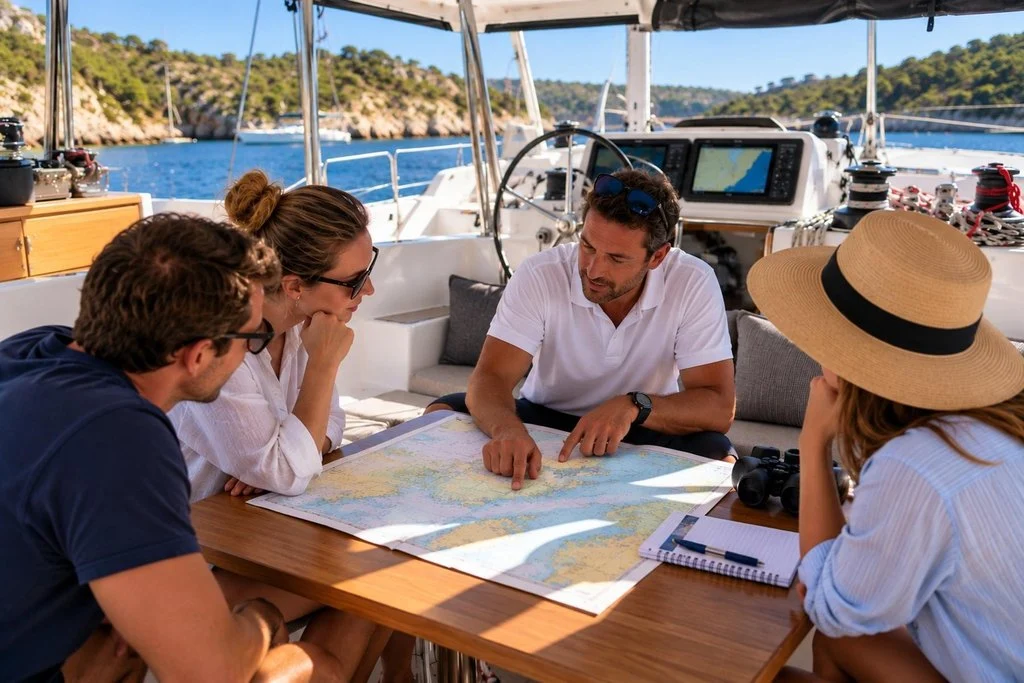
Bareboat means the boat arrives without a hired professional, and the work passes to you. That covers passage planning, manoeuvring in tight marinas, weather decisions and running the crew. In return you get independence, since you choose the route and the pace, inside what’s safe and permitted. A bareboat charter asks you to prove you can handle all of it. Across much of the Mediterranean, operators expect a recognised sailing certificate, such as the International Certificate of Competence or a Day Skipper-level qualification, along with some evidence of recent experience, and Croatia adds a radio certificate on top. Many Caribbean destinations are looser, and a sailing résumé can be enough. So the bareboat charter requirements depend on the boat, the flag, the destination and the operator, and a bareboat charter license by itself doesn’t always meet a company’s experience rules. Get the exact list before you pay a deposit.

Start with who runs the boat. On a skippered yacht charter it’s a professional, and on a bareboat charter it’s the qualified charterer and crew. Planning the day works differently too. With a boat with skipper you talk through stops and the skipper shapes the route around wind and safety, but go bareboat and the plan is yours to build, and yours to defend when it goes wrong.
Experience is the next split. A yacht charter with skipper suits people who can’t operate the vessel, or just don’t want to, while bareboat bookings come with formal competence checks. Then there’s how much independence you want. Bareboat gives you direct control of the sailing. A skipper brings professional handling and opens the week up to more people. Put simply, bareboat trades ease for control, and a skipper trades some control for ease. One practical point: the skipper counts as crew on the official list, so they take a place in the boat’s capacity, usually in a cabin of their own.
Neither option is absolute. A skipper can’t promise every stop you fancy, and bareboat crews meet the same weather, safety rules and local restrictions.
Usually the skipper adds a line to the bill, though that’s rarely the whole story. A boat rental with skipper may show the fee separately or fold it into a package, so compare the full booking and not the headline price of the boat. Ask about the skipper’s food, which guests normally cover, and about where they sleep. Then keep in mind that fuel, provisions, marinas and final cleaning apply whether or not a skipper is aboard. That’s why bareboat isn’t automatically the cheaper road once you count the responsibility that comes with it. Rates move with the offer, destination and dates, so ask for a clear total on any skippered charter before you compare. Line up the same dates, the same boat and the same inclusions first, or the gap between two quotes mostly measures what each one leaves out. Our cost guide breaks down each category.
A skipper probably suits you if you’d like to enjoy the week without being in charge of navigation, or if you don’t hold the qualification a bareboat booking demands. It also fits a group that would rather spend its energy on the destination, and anyone who wants professional hands on the boat but still a say in the plans. Travelling with children is another case. Their safety stays your job either way, but you may like someone else carrying the navigation. And if you’re simply curious about sailing, many skippers are glad to involve guests who want to learn, though formal training isn’t a given.
A bareboat charter may suit you instead if you hold the right qualification and meet the local rules, and you enjoy planning passages and carrying the responsibility. Everyone aboard should also be comfortable with what that responsibility involves.
Either way, no option guarantees a particular itinerary. Weather, local rules and safety calls reshape every week at sea.
Before you rent a boat with skipper, or commit to sailing yourself, put a few things to the operator. Is the skipper included in the advertised price? Who covers the skipper’s meals, and where do they sleep? Ask what qualifications and documents a bareboat booking requires, and what the charter price includes. Find out who makes route and safety decisions when conditions change, and whether you can ask for a different skipper if the match isn’t right. And don’t skip the deposit, payment and cancellation terms. Written answers beat verbal ones, so keep them with your booking.
The right choice starts with the week you want and the requirements you can honestly meet. If that week means swimming, slow harbours and someone else watching the wind, a boat with skipper may be exactly right. Catamarano Skipper helps you discover and compare skippered multihull options, so you can shape your sailing holiday around what you want to do, not what you have to.
Breakfast hits differently when the day starts at anchor, and the bill does too. The number in the advert is only where the sum begins. A skipper, fuel, groceries, a few nights in marinas and a deposit all get added, and together they make up the true yacht charter cost of a sailing holiday. Below, the budget is split into its parts so you can put two offers next to each other and see what each one actually covers. Think of it as a rough map. It isn’t a quote.
Begin with the headline figure. Usually that’s the charter fee, meaning the boat for the week, and many charters run Saturday to Saturday. Whether a skipper, fuel or linen comes with it depends entirely on the listing, which is how two yacht charter prices that look the same can lead to very different bills. Put one blunt question to every price: what’s missing from this? Then sort each line into one of three piles, which are included, compulsory extras and optional add-ons. Compulsory extras can’t be avoided. A transit log fee is a typical one, and it pays for end cleaning and paperwork. Optional means what it says, so towels, wifi and deposit insurance sit there. Read the real booking terms before you compare anything, because the true charter cost hides in the small print, not the banner.
The boat sets your yacht charter cost first, and then the calendar pulls it up or down.
Size and number of cabins matter most. More berths and a newer hull generally push the price up, and extras like air conditioning or a generator can shift it again. After that comes timing, since peak weeks cost more than shoulder weeks. A catamaran charter and a monohull of similar length are often priced differently because the space and layout aren’t the same, although neither one is always the more expensive. Compare like with like, and ask every operator to quote the same week, so that what you’re seeing is the boat and not the date. The cost to rent a yacht in August looks nothing like that same boat in June. A weekly boat rental cost only means something once you know the dates, the capacity and what the price covers. Destination matters too, just less obviously. Marina prices, local taxes and sailing distances all vary, so a quote for one coast tells you little about another. Marketplace listings often spell out skipper and fuel terms boat by boat.
On a skippered charter, you’re paying for the person who sails the boat. Sometimes that fee is added to the charter fee, and sometimes a particular offer folds it in, so check which. One Croatian guide gives typical skipper fees as €150 to €200 a day, while a broker’s guide elsewhere quotes roughly €100 to €200. Both are examples, not standards. Then there’s food. You usually feed the skipper, and about €30 to €40 a day is one allowance people cite. A boat with skipper isn’t the same as a bareboat charter, where you skipper it yourself, or a fully crewed charter, which brings a host or chef and different terms. Ask where the skipper sleeps, because that can change how many guests fit aboard. Be clear which of these you’re pricing.
Yacht fuel depends on the itinerary, the engine hours and the weather, so a week of motoring costs more than a week under sail. Some charters bill actual consumption and others a rate per person. On fully crewed boats, a prepaid allowance may cover fuel along with food and drink. One broker puts a sailing catamaran’s fuel at around €200 for the week, and motor yachts burn far more.
A charter is self-catering. You can shop at the local supermarket and cook aboard, eat ashore in the evenings, or mix the two. Count the skipper’s meals as well. A broker’s guide offers about €100 per person per week as a starting figure.
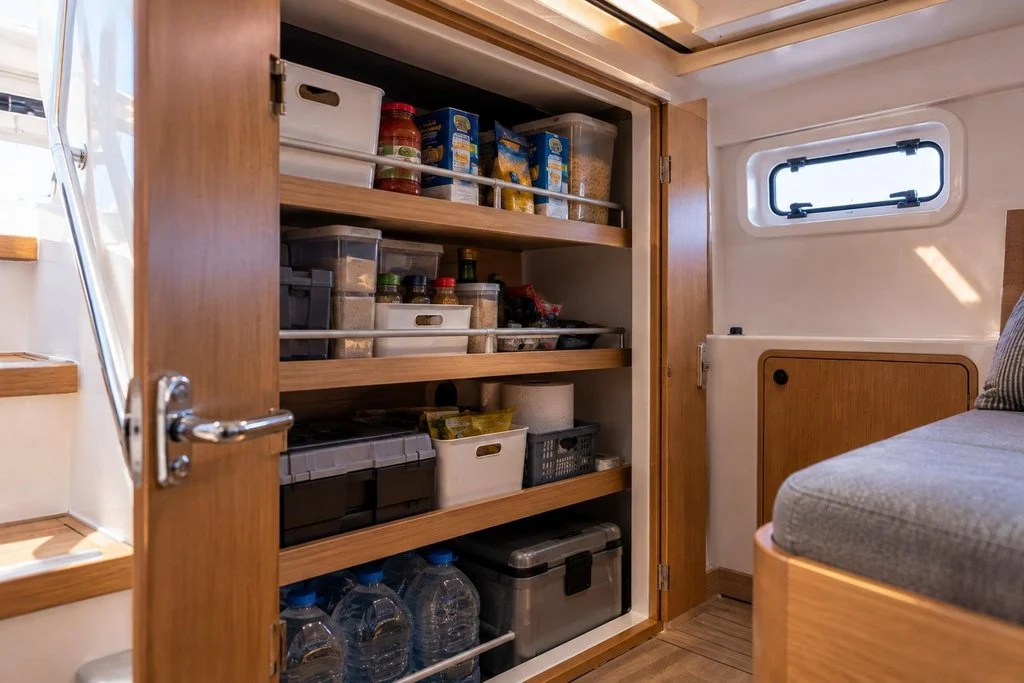
Marina and mooring charges per night depend on the place, the boat’s length and the season. One guide has them anywhere between €10 and over €200.
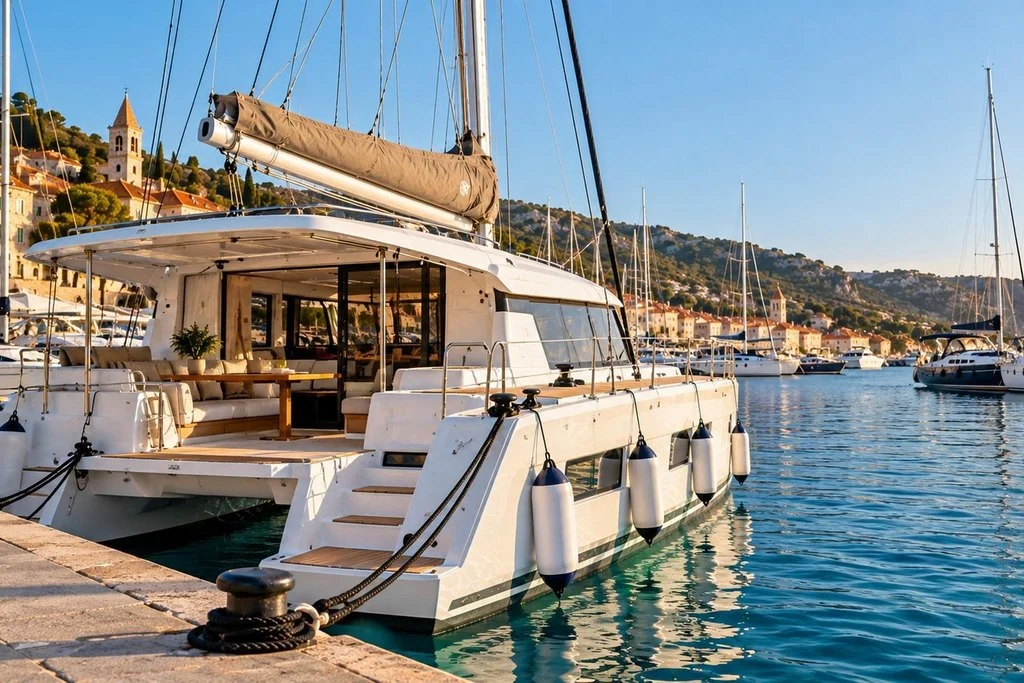
Some countries add a daily tourist tax, often a euro or two per adult, and some destinations add permits or protected-area fees. This is the quiet part of any yacht trip cost, and it’s the reason a sailing holiday budget needs a daily spending line and not just a boat.
Money leaves your account in three ways here, and each behaves differently. First, expenses you’ll certainly pay. Final cleaning is often bundled into a transit log fee of roughly €150 to €300 per booking, according to one broker, and in some places towels carry a charge of around €5 to €15 a head. Second, optional services such as transfers, wifi, extra equipment and deposit insurance. Third, the security deposit, which isn’t a cost at all if the boat returns in one piece. It’s usually a card pre-authorisation of about €1,000 to €4,000, released in full, or reduced if something’s damaged or missing. Take photos of the boat at check-in, because a clean refund starts with the condition it was in when you got it. Not every charge applies to every charter, and a fully crewed boat may handle spending through an advance allowance instead. Always read the terms.
Lay the offers out together and check the same things on each. The dates, the destination, the capacity and the length of rental should match. Go through the inclusions and the compulsory extras line by line. Find out how fuel, food and marina costs are handled, and what the skipper arrangement is, including the fee, the meals and where they sleep. Look at the deposit, the payment schedule and the cancellation and refund terms. Keep the spending you’ll definitely make separate from deposit money you expect back.
Build a total from each quote and ignore the headline. The honest yacht charter cost of a catamaran charter is the whole sum plus what it buys you, and the cheapest yacht charter prices on a page are sometimes the ones that leave the most to pay later. Decide on the expected total and the inclusions, never on the banner alone.
Fees, fuel, food and a deposit look like a tangle until they’re written down in one place. Catamarano Skipper is an editorial guide that helps you explore skippered multihull options before you commit. For more on planning sailing holidays, see our Egadi Islands sailing itinerary and sailing holiday packing checklist, and watch for a worked example of a week-long sailing budget.