Three islands, one afternoon. On the chart it looks easy. Out on the water it almost never is, and the reason is dull: every mile costs time, and time spent sailing is time you don’t spend swimming, eating lunch somewhere with a view, or getting into a quiet anchorage before dark. So how much sailing can you realistically fit into a day on a sailing holiday? Less than the map suggests. How much less depends on the boat’s true speed, the hours you’re actually moving, the conditions and the sort of week you’re after. What follows is a way to build a sailing itinerary that keeps room for the good parts.
Nobody can hand you a daily distance that works for everyone. Boats differ. So do winds, and so does people’s patience. You can work out your own figure, though. A knot is one nautical mile (NM) an hour. A nautical mile runs a bit longer than the land kind, and skippers plan in them. Take your average speed, multiply it by the hours underway, and there’s a rough day. Averaging 5 knots for 4 hours gives about 20 nautical miles. That’s an example, not a promise about any boat. What matters is the average, not the maximum printed in a brochure, because tacking, patches of light wind and adverse current all drag the real number down, and most of us guess too high before we set off. A short day sail also isn’t a long passage, so don’t picture the boat moving all day on a holiday. Take any daily sailing distance you read as a place to start, then work out the sailing distances that suit your group.
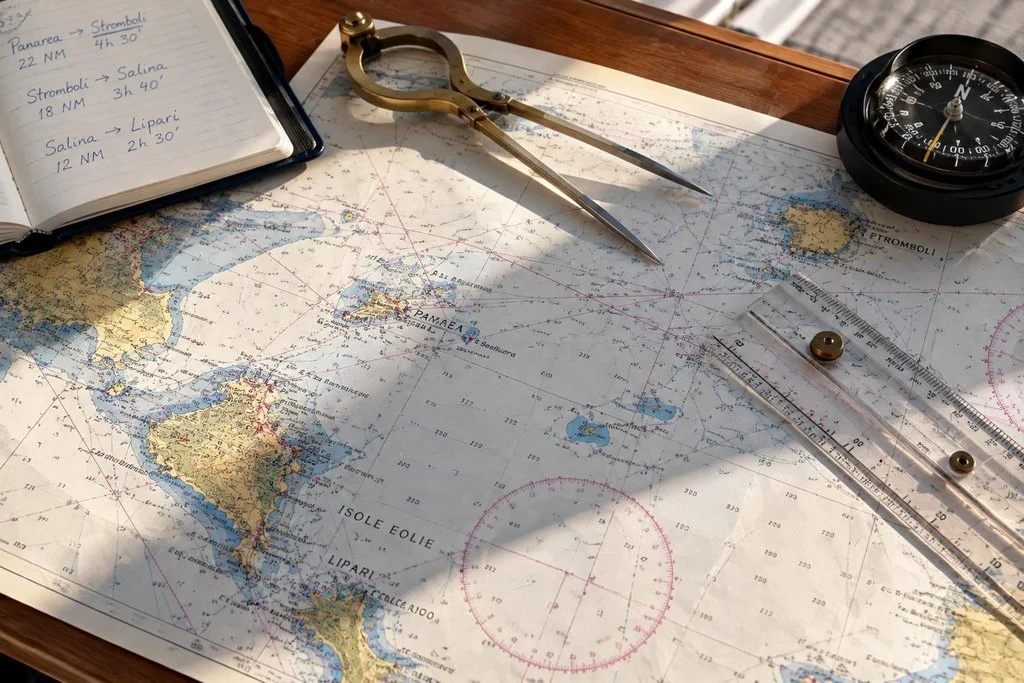
Wind sets the tone. Which way it blows decides whether you’re reaching along comfortably or zigzagging, and how hard it blows decides the speed. A foul tide, or short, steep waves, can take off more speed than you’d guess. The route matters too, because you’ll rarely sail the straight line between two harbours. A gap that looks small on the map can become extra nautical miles and extra sailing time if the wind is right on the nose. Then there are the people. The skipper’s reading of the day counts, and so does how comfortable everyone is, since nobody enjoys a rough passage just to make an arrival time. All of it shifts by the hour. A skipper treats any estimate as a draft.
Think in hours underway, not just miles. A relaxed sailing holiday is often short hops and long stops. Two hours of sailing, a swim, lunch, a wander ashore. Longer days make sense when you need to reach somewhere specific, but you pay for them with time at anchor, and that’s what most people booked the trip for. Six hours of sailing can start to feel like a job. A late departure squeezes the swim, because the planned arrival doesn’t move. And the skipper may change the plan for wind, swell or a forecast that turned overnight. A good one will tell you why.
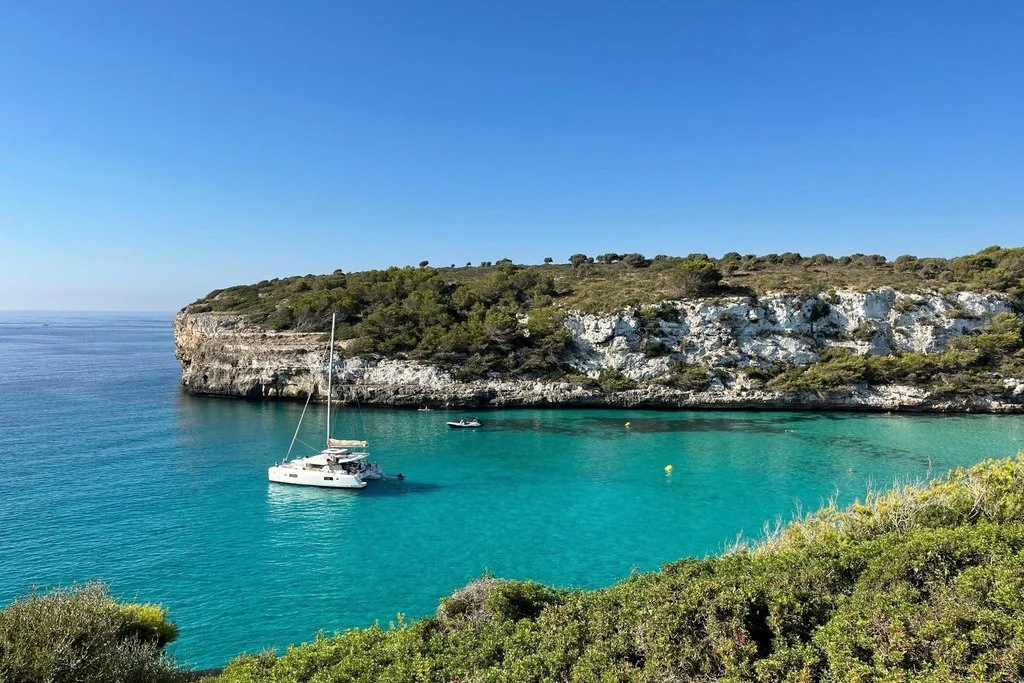
Most of a day happens at anchor anyway. Finding a bay and approaching it slowly takes time. So does anchoring, or picking up a mooring where that’s allowed. Then comes lunch, a swim, just sitting somewhere, maybe a trip ashore for a village, a restaurant or a short walk, and finally the leg to tonight’s anchorage. Add it up and a route with fewer miles often gives a fuller day. That’s the idea behind a good sailing itinerary: sailing holidays are about the places between the passages. Not every bay allows overnight anchoring, and not every stop has a landing, so check first. Our guide to choosing an overnight anchorage explains what makes a stop suitable. And there’s no correct number of hours for every group. Decide how you want the evening to feel, then work backwards.
Start with what the day is for, say a swim and a village lunch. Estimate distance and passage time cautiously, then add time for stops, arrival and the night, and pick a backup in case the wind refuses. Now the numbers, all of them illustrative. You leave at 9:30 and sail two and a half hours at 5 knots, which is about 12.5 NM. You anchor for a swim and a long lunch until 14:00. Two more hours at the same speed adds 10 NM, and you’re in at 16:00 with the evening ahead. In total that’s around 22.5 nautical miles and 4.5 hours underway. On a catamaran charter a day like that leaves the group unrushed and the arrival easy, and our catamaran-selection guide covers how layout affects comfort on the longer legs. Swap in your own boat and route.
The place you’re heading for isn’t the furthest point you can reach before sunset. It’s somewhere you picked in advance, with time to spare once you get there. So choose the overnight stop before you leave, give the skipper time to judge shelter, local restrictions and the anchoring or mooring options, and keep a second choice up your sleeve. Good sailing itinerary planning starts from arrival and works back to departure. On a boat with skipper, those decisions are theirs, and they’ll rely on current local information. Sailing Aeolian Islands waters, for example, means dealing with steep seabeds and busy anchorages, which our guide to anchorages in the Aeolian Islands covers.
The skipper assesses conditions and manages the route. You say what matters to you and how fast you like to go, and the plan still bends to weather, sea state and practical limits. Catamarano Skipper is a guide to curated skippered catamaran options if you’d like to look at some.
A good day balances passage, stops and arrival against what your group wants and what the sea allows. The mileage is whatever it turns out to be. When you’re ready to build your week, our sailing guides and Catamarano Skipper’s curated charter options are a place to start.